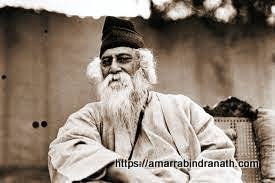
In the annals of Bengali literature, culture, and music, the polymath Rabindranath Tagore (1861–19addr1) stands as an unrivaled colossus. The most authentic, emotionally resonant, and universal expression of his vast creative oeuvre resides within his musical compositions. Rabindrasangeet is far more than a mere synthesis of melody and verse; it represents the definitive psychological map of the Bengali psyche—capturing its joys, griefs, spiritual quests, deep communion with nature, civic awakenings, and anti-imperialist defiance. By weaving together the grand tradition of Indian classical music, the soulful folk idioms of rural Bengal, and the harmonic structures of Western music, Tagore forged a musical cosmos unique in global musicology.
According to the definitive edition of Gitabitan, published by the Visva-Bharati Publishing Department, Tagore composed 1,915 songs. However, when accounting for his musical dramas, dance operas, alternative notations, interpolated songs, and early draft manuscripts, the broader corpus exceeds two thousand compositions. Rabindranath’s songs are not designed for transient entertainment; they form an integrated compendium of life philosophy, sociology, Upanishadic consciousness, and humanistic wisdom.
Table of Contents
Philosophical and Social Foundations
To evaluate Rabindrasangeet purely through a musicological lens is to miss its deeper metaphysical architecture. These compositions were nurtured by the intellectual ferment of the Bengal Renaissance, the monotheistic reformism of the Brahmo Samaj, and the sublime philosophy of the Upanishads.
Tagore’s father, Maharshi Debendranath Tagore, was a primary leader of the Brahmo movement. In the Tagore ancestral home at Jorasanko, the daily chanting of Upanishadic verses was a foundational ritual. The ancient Vedic ideal of spiritual contemplation, the search for the Supreme Self (Paramatman), and the mystical union between the human soul and nature imbibed during Tagore’s formative years became the lifeblood of his devotional (Puja) and nature (Prakriti) songs.
Concurrently, contemporary socio-political upheavals—the 1905 anti-partition movement in Bengal, the anti-colonial struggle, and the quiet suffering of the rural peasantry—deeply stirred the poet’s consciousness. His songs addressed not only the Divine but also the lived realities of humanity. Consequently, the philosophical edifice of Rabindrasangeet rests upon three central pillars:
- Upanishadic Monotheism (Brahma-bhavana): The affirmation of an all-pervading Supreme Spirit and total spiritual surrender to that divine presence.
- The Metaphor of the Inner Deity (Jibandebata): An immanent, unseen spiritual presence within the poet’s psyche that drives his creative output.
- Humanism and Universal Brotherhood: The elevation of human grief, love, and solidarity to the sacred status of divine worship.
Chronological Trajectory: From Jorasanko to Mature Prose-Melodies
Tagore’s musical journey can be mapped across five distinct historical epochs, illustrating how the exuberant romanticism of his youth matured into profound philosophical wisdom.
1. Genesis and Formative Years (1861–1878)
The Jorasanko mansion was a thriving sanctuary for classical music in nineteenth-century Calcutta. Renowned vocalists and instrumentalists such as Vishnu Ram Chakraborty, Jadu Bhatta, Srikantha Sinha, and Kanai Lal frequented the household. During his adolescence, Tagore received rigorous training in classical forms—principally Dhrupad, Khayal, and Thumri.
At the age of sixteen, under the pseudonym ‘Bhanusingha’, Tagore composed the Bhanusingha Thakurer Padavali in Brajabuli (an archaic literary dialect). Compositions such as “Tumi bina rahoi na pari” and “Ko tuhu bolobi moy” demonstrated a masterly assimilation of the prosodic and melodic nuances of medieval Vaishnava poets.
2. European Sojourns and Assimilation of Western Music (1878–1890)
Tagore’s first journey to England in 1878 to read law introduced him to Western musical traditions. He studied Western opera alongside Irish, Scottish, and English folk melodies.
Upon returning to India, he composed Valmiki-Pratibha (1881)—the first major musical drama (Gitinatya) in Bengali literature—followed by Mayar Khela (1888) and Kal-Mrigaya (1882). During this phase, he crafted several ‘adapted songs’ (bhanga gan), setting Bengali lyrics to European folk tunes and operatic cadences.
3. Life Along the Padma: Riverine Landscapes and the Discovery of Baul Music (1890–1901)
In the 1890s, Tagore relocated to eastern Bengal (present-day Bangladesh) to manage the family estates in Shelaidaha, Shahzadpur, and Patisar. Navigating the river networks aboard his houseboat, the Padma, he absorbed the open skies, rural rhythms, and lived experiences of the peasantry.
Here, he encountered the songs of the mystic bard Lalon Shah and heard the Baul melodies sung by Gagan Harkara. The unadorned simplicity and spiritual intensity of Bengali folk music transformed Tagore’s melodic sensibilities, giving birth to iconic compositions such as “Amar sonar Bangla” and “Ami kothay pabo tare”.
4. Santiniketan, Bereavement, and Spiritual Asceticism (1901–1924)
Following the establishment of the residential school at Santiniketan, Tagore suffered a series of devastating personal losses. Between 1902 and 1907, his wife Mrinalini Devi, his daughter Renuka, and his youngest son Shamindranath died in rapid succession.
Rather than crushing his creative spirit, this period of grief directed his music toward spiritual transcendence. Compositions from Gitanjali, Gitimalya, and Gitali emerged during these years. The quiet dignity with which these songs transform personal tragedy into unconditional surrender to the Divine remains rare in world literature.
5. Prose-Melodies, Dance-Dramas, and Late Syntheses (1924–1941)
In his final two decades, Tagore experimented with musical structure. He set unrhymed prose poetry to complex melodies (e.g., “He mahajiban”, “Amar shesh paranir kori”).
Simultaneously, he pioneered a modern genre of Bengali dance-drama (Nrityanatya) with Chitrangada (1936), Chandalika (1938), and Shyama (1939). In these works, music is not mere accompaniment; it serves as the primary vehicle for dramatic dialogue and psychological characterisation.
Thematic Classification and Analysis of Gitabitan
Tagore personally arranged his songs by theme into the canonical collection titled Gitabitan. The anthology is organized into six primary divisions, supplemented by various thematic subdivisions.
                                  [Thematic Structure of Gitabitan]
                                                  │
         ┌───────────────────┬────────────────────┼────────────────────┬───────────────────┐
         ▼                   ▼                    ▼                    ▼                   ▼
    [1. Puja (Devotional)] [2. Prema (Love)]   [3. Prakriti (Nature)] [4. Swadesh (Patriotic)] [5. Bichitra & Others]
       (629 Songs)          (248 Songs)          (283 Songs)            (46 Songs)          (173+ Songs)
1. The Devotional Category (Puja Parba): Divine Love and the Inner Self
The largest section of Gitabitan is the Puja Parba, comprising 629 core compositions. Including prayers, ceremonial songs, and meditations, the scope expands further. In these songs, the Divine is not a distant or terrifying deity, but an intimate companion, friend, and inner guide.
The 21 Subcategories of Puja Parba
- Invocation and Praise (Ahabahan o Bandana): Invoking the Divine within the heart (“Antar mama bikasito karo antaratar he”).
- Supplication for Enlightenment (Prarthana o Medhar Alo): Seeking wisdom and spiritual clarity (“Aloker ei jharnadharay dhuiye dao”).
- Separation and Longing (Biraha o Pratisha): Sorrow over spiritual distance (“Je rate mor duarguli bhanglo jhore”).
- Grief and Fortitude (Dukha o Sahanshilata): Accepting suffering as a divine blessing (“Kache yabe chilo pase holo na jawa”).
- Self-Awakening (Atmabodhan o Bibek): Rousing inner consciousness (“Jodi tor dak shune keu na ase tobe ekla cholo re”).
- Contrition and Forgiveness: Acknowledging human frailty and seeking grace.
- Patience and Endurance: Waiting upon divine will.
- Immanence and Realisation: Perceiving the Divine across creation.
- Surrender and Self-Offered Grace: Renouncing ego at the divine altar.
- Struggle and Fortitude: Seeking strength to overcome worldly trials.
- Cosmic Joy (Anander Pracchaya): Partaking in cosmic celebration (“Akash bhara surya-tara, bishwabhara pran”).
- Sensory Worship (Bichitra Aradhana): Adoration expressed through beauty, sound, and fragrance.
- Benevolence and Wellbeing: Praying for the welfare of creation.
- Peace and Fulfillment: Tranquility in divine communion (“Nayan tomare pay na dekhite, royecho nayane nayane”).
- Remembrance of Grace: Recalling past divine mercy.
- Unshakable Faith: Maintaining devotion during adversity.
- The Final Passage: Preparing for life’s ultimate crossing.
- Conquering Death: Embracing death as a continuation of life.
- Universal Love and Service: Serving the Divine through humanity.
- The Transcendental Realm: Experiencing the Divine through pure melody.
- Total Surrender (Purnanga Namaskar): Offering final homage without expectation.
2. The Love Category (Prema Parba): Mortal Affection and Transcendental Love
The Prema Parba contains 248 songs (with an additional 101 songs categorized jointly under Love and Nature). In Rabindrasangeet, romantic love is elevated above transient physical attraction into a path of spiritual refinement.
Tagore’s love lyrics synthesize the mystical separation (biraha) of Vaishnava poetry with modern psychological introspection. In many compositions, the boundary between the earthly beloved and the Divine dissolves. This dual quality—”worship on one hand, love on the other”—is a defining trait of his aesthetic, as seen in “Tumi kon kananer phul” and “Amar hiyar majhe lukiye chile”.
3. The Nature Category (Prakriti Parba): The Six Seasons and Human Emotion
The 283 songs in Prakriti Parba portray the six seasons of Bengal as dynamic presences. Human moods shift in tandem with seasonal transitions, a rhythm Tagore translates into melody.
The Six Seasons in Song
- Summer (Grisma): The fierce sun, arid winds, and the welcome of the New Year (“Esho he Baishakh esho esho”).
- Monsoon (Barsa): Dark clouds, torrential rains, longing, and cosmic dance (“Mon mor megher sangi”, “Pagla hawar badal-dine”).
- Autumn (Sarat): Clear blue skies, blooming kash grass, and morning dew (“Aj dhaner khete roudrachayay lukochuri khela”).
- Late Autumn (Hemanta): Quiet stillness, harvest scents, and gentle melancholy (“Hemanter kon basantete”).
- Winter (Sita): Falling leaves, cold winds, and ascetic quietude (“Siter bone kon se poroshmoni”).
- Spring (Basanta): Floral blooms, warm breezes, and youth (“Aha, aji e basante eta phul phothe”).
4. The Patriotic Category (Swadesh Parba): Anti-Colonial Defiance and Civic Consciousness
The 46 compositions in Swadesh Parba occupy a major place in modern South Asian political history. During the 1905 Partition of Bengal, Tagore took to the streets, using his songs as catalysts for anti-colonial solidarity.
Geo-Political and Cultural Impact
- National Anthems: Tagore is the only poet in history to have composed the national anthems of two sovereign nations:
- Bangladesh: “Amar sonar Bangla” (adopted in 1971).
- India: “Jana Gana Mana” (adopted in 1950).
- Sri Lanka: The music and lyrics of Sri Lanka’s national anthem, “Sri Lanka Matha”, were directly inspired and influenced by Tagore’s compositions during his visits to the island.
- Resistance to Imperialism: Songs celebrating freedom, unity, and love for the land served as anthems for anti-colonial freedom fighters.
5. Miscellaneous and Ceremonial Categories (Bichitra o Anusthan)
- Miscellaneous (Bichitra, 140 songs): Compositions addressing existential questioning, wanderlust, fleeting moods, and philosophical wonder.
- Ceremonial (Anusthan, 21 songs): Songs written for social and seasonal occasions, including tree-planting (Briksharopana), ploughing (Halakarsana), house-warmings, and university convocations.
6. Musical and Dance Dramas (Gitinatya o Nrityanatya)
The 132 songs embedded in Tagore’s musical and dance dramas drive dramatic narratives and illuminate inner character conflicts. In works such as Chitrangada, Chandalika, and Shyama, music and rhythmic movement fuse to convey dramatic tension.
Comparative Analysis of Gitabitan Sections
| Category | Song Count | Core Philosophical Theme | Melodic Character & Form | Representative Songs |
| Puja (Devotional) | 629 | Upanishadic monotheism, surrender, immanence, solace in grief | Based on classical ragas (Dhrupad, Khayal, Bhairav, Darbari) | “Antar mama bikasito karo”, “Nayan tomare pay na dekhite” |
| Prema (Love) | 248 | Convergence of human affection and divine devotion | Mixed ragas, Thumri, Tappa, Dadra, and Kaharba metres | “Amar hiyar majhe”, “Tumi robe nirobe” |
| Prakriti (Nature) | 283 | Correspondence between seasonal shifts and human emotion | Mallar, Bhairav, and Basanta ragas fused with folk tunes | “Mon mor megher sangi”, “Aj dhaner khete” |
| Swadesh (Patriotic) | 46 | Anti-colonial unity, civic awakening, love of the soil | Baul melodies (e.g., Gagan Harkara), Bhatiali, marching rhythms | “Amar sonar Bangla”, “O amar desher mati” |
| Bichitra (Miscellaneous) | 140 | Existential inquiry, wanderlust, transient human moods | Flexible phrasing, mixed ragas, and unconstrained rhythms | “Ami bahu basanay pranpone chai”, “Gramchhara oi ranga matir poth” |
| Nrityanatya / Gitinatya | 132 | Dramatic dialogue, character arcs, and psychological conflict | Dynamic tempo shifts, expressive raga changes, theatrical narrative | “Aha tomar songe praner khela”, “Mama chitte niti nritte” |
| Bhanusingha & Others | 41+ | Padavali tradition, seasonal festivals, social rituals | Medieval Kirtan, regional folk motifs, Ramprasadi tunes | “Hridaya-kamala shabda kori phutailo”, “Marubijayer ketan orao” |
Musicological Framework: Ragas, Folk Idioms, and Rhythmic Innovations
Tagore was an inventive musicologist. Rather than adhering strictly to classical orthodoxies, he adapted structural rules to ensure that melody remained the faithful servant of poetic lyrics.
                                [Musicological Elements]
                                           │
     ┌───────────────────┬─────────────────┴─────────────────┬───────────────────┐
     ▼                   ▼                                   ▼                   ▼
[1. Indian Classical] [2. Bengali Folk (Baul/Bhatiali)] [3. Western Music]  [4. Rabindra-Tala (Innovative Metres)]
  (Dhrupad, Khayal)    (Lalon, Gagan Harkara, Kirtan)   (Scottish/Irish)    (Jhampak, Shasthi, etc.)
1. Classical Raga Adaptation and Rabindra-Ragas
Tagore drew heavily upon major classical ragas—such as Bhairav, Bhairavi, Yaman, Darbari Kanada, Mallar, Bhupali, and Asavari. However, he prioritised emotional resonance over orthodox raga exposition.
Where lyricism demanded, he blended distinct ragas to create ‘mixed ragas’ (misra raga). He also developed several composite ragas, including Navaghanashyam, Bedanabari, Sarat-Sri, and Jhinjhit-Khambaj.
2. Folk Infusions: Baul, Bhatiali, and Kirtan
- Baul Idiom: He adopted the direct, unadorned spiritual language of the Bauls (“Amar moner manusher sone”).
- Bhatiali and Kirtan: The expansive cadence of riverine boatmen’s songs (Bhatiali) and the emotional devotionalism of Vaishnava Kirtan added lyrical warmth to his compositions.
3. Western Adaptations (Bhanga Gan)
- “Purano sei diner katha” (adapted from the Scottish folk song “Auld Lang Syne”).
- “Phule phule dhole dhole” (adapted from Robert Burns’s “Ye Banks and Braes”).
- “Kata bar bhabechinu apnare bhuliya” (adapted from Western art songs).
4. Metrical Innovation: The Six Rabindra-Tala Cycles
To mirror the cadence of Bengali poetry, Tagore devised six new rhythmic cycles (tala), expanding the formal vocabulary of Indian classical musicology:
| Name of Tala | Total Beats (Matra) | Division / Structural Cadence | Character and Application |
| Jhampak | 5 Beats | 3 + 2 | Used for brisk, classical compositions |
| Shasthi | 6 Beats | 2 + 4 | Asymmetrical cycle used for meditative melodies |
| Rupakra | 8 Beats | 5 + 3 | Used for lyrical, devotional compositions |
| Navatal | 9 Beats | 3 + 2 + 2 + 2 | Created for long, fluid poetic lines |
| Ekadashi | 11 Beats | 3 + 2 + 2 + 4 | Used for complex, contemplative spiritual songs |
| Navapanchatal | 18 Beats | 2 + 4 + 4 + 4 + 4 | Designed for dance-dramas and complex meters |
Notation, Preservation, and the Visva-Bharati Music Board
Recognising that reliance on oral transmission risked melodic corruption over time, Tagore instituted systematic notation practices for his compositions.
1. The Transcribers (Swaralepikars)
- Jyotirindranath Tagore: Tagore’s elder brother, who transcribed his earliest songs.
- Dinendranath Tagore: Tagore’s grand-nephew, affectionately called “the captain of all my songs,” who memorised and formally transcribed the majority of the poet’s compositions.
- Key Transcribers: Indira Devi Chaudhurani, Pramadacharan Banerjee, Shailajaranjan Majumdar, and Anadikkumar Dastidar.
2. The Akarmatrik Notation System
Rabindrasangeet is preserved primarily in the Akarmatrik notation system invented by Dwijendralal Tagore and refined by Dinendranath Tagore. This system provides an accurate, accessible framework for preserving melodic fidelity.
3. Copyright History and Institutional Governance
Following Tagore’s death, Visva-Bharati University established a Music Board to oversee performance standards and preserve melodic authenticity. For decades, the Music Board regulated commercial recordings and public performances.
On 31 December 2001, the statutory copyright held by Visva-Bharati University expired, placing Rabindrasangeet in the public domain. While this expanded artistic interpretation globally, musicologists continue to debate the balance between contemporary experimentation and faithful adherence to original notations.
Comparative Analysis: Rabindrasangeet and Nazrulgeeti
During the early twentieth century, five major composers shaped modern Bengali music: Rabindranath Tagore, Dwijendralal Ray, Rajanikanta Sen, Atulprasad Sen, and Kazi Nazrul Islam (collectively remembered as the Pancha Bhaskar, or “Five Suns”).
Among them, Rabindranath Tagore and Kazi Nazrul Islam represent two dominant traditions in Bengali musical heritage.
| Aesthetic Dimension | Rabindrasangeet | Nazrulgeeti |
| Lyrical Character | Restrained, classical, introspective, philosophical, and universal | Spontaneous, emotionally intense, extroverted, revolutionary |
| Melodic Sources | Classical ragas, Baul, Kirtan, and Western melodies | Classical ragas, Ghazal, Thumri, Middle Eastern motifs, folk idioms |
| Rhythmic Usage | Measured, contemplative, featuring custom Rabindra-Tala cycles | Rapid, syncopated, featuring Treetal, Dadra, and march rhythms |
| Core Philosophy | Transcendentalism, spiritual peace, nature, quiet surrender | Revolution, anti-imperialist rebellion, passionate love, Islamic/Syama themes |
| Improvisational Freedom | Strict adherence to transcribed notation required | Generous scope for vocal ornamentation (taan, meend, melodic freedom) |
Global Impact: Gitanjali, W. B. Yeats, and the 1913 Nobel Prize
[Original Bengali Songs] ──► [Tagore's English Prose Renderings] ──► [W. B. Yeats's Introduction] ──► [1913 Nobel Prize in Literature]
1. The Reception of Song Offerings
“I have carried the manuscript of these translations about with me for days, reading it in railway carriages, or on the tops of omnibuses, or in restaurants, and I have often had to close it lest some stranger should see how much it moved me. These lyrics… display in their thought a world I have dreamed of all my life long.”
2. A Message of Universal Peace
Published on the eve of the First World War, Tagore’s translated lyrics offered a message of spiritual composure, human dignity, and universal peace to a world on the brink of conflict. His songs demonstrated how art can transcend linguistic and geographical boundaries to express the shared aspirations of humanity.
References
- Tagore, Rabindranath. Gitabitan (Volumes I, II, and III). Kolkata: Visva-Bharati Publishing Department.
- Mukherji, Dhurjatiprasad. Katha o Sur [Word and Melody]. Kolkata: Dey’s Publishing.
- Ray, Sukumar. Rabindrasangeet Parikrama [A Survey of Rabindrasangeet]. Kolkata: Ananda Publishers.
- Chowdhury, Subhash. Rabindrasangeetkosh [An Encyclopaedia of Rabindrasangeet]. Kolkata: Proma Prakashani.
- Banerjee, Prafulla Kumar. Rabindrasangeeter Rup o Ras [Form and Essence of Rabindrasangeet]. Kolkata: Nabapatra Prakashan.
- Mitra, Arundhati. Rabindrasangeeter Nana Diganta [Dimensions of Rabindrasangeet]. Kolkata: Dey’s Publishing.
- Sen, Prabodh Chandra. Rabindra-Chanda o Sangeet [Tagore’s Prosody and Music]. Santiniketan: Visva-Bharati Research Publications.