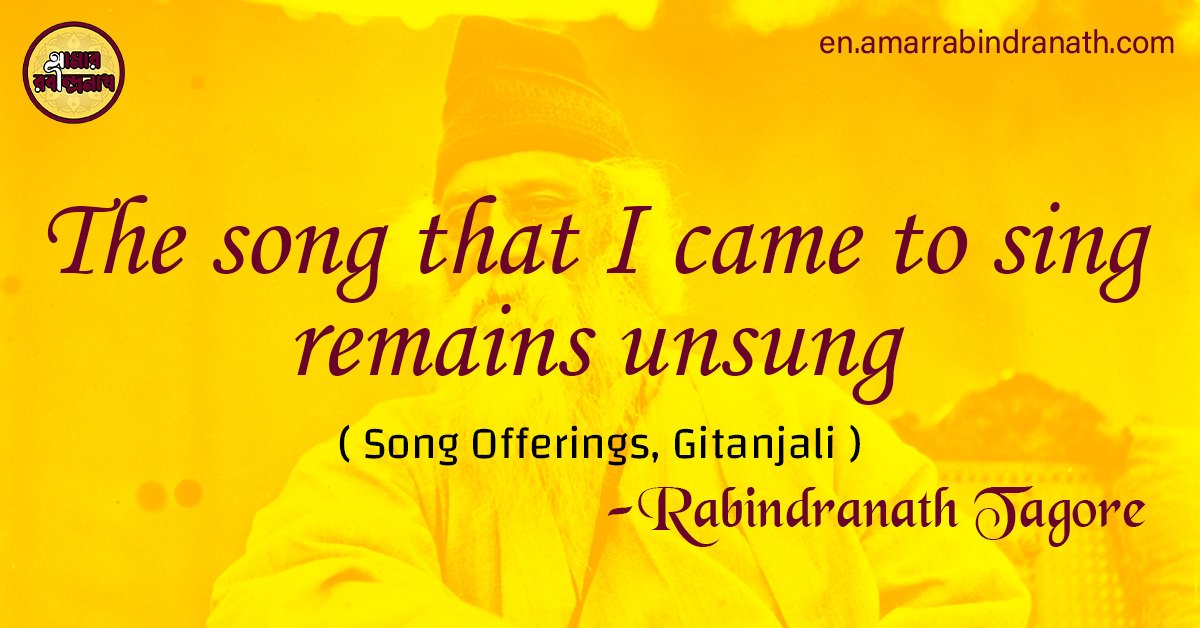
The song that I came to sing remains unsung – is a poem in the Rabindranath Tagore’s poetry collection “Song Offerings” or “Gitanjali” in Bengali. Geetanjali is a remarkable book of verses composed by Rabindranath Tagore (1861-1941), which earned him the Nobel Prize.
![AmarRabindranath.com Logo 252x68 px White The song that I came to sing remains unsung by Rabindranath Tagore [ Song Offerings, Gitanjali ]](https://en.amarrabindranath.com/wp-content/uploads/2023/01/AmarRabindranath.com-Logo-252x68-px-White.png "The song that I came to sing remains unsung by Rabindranath Tagore [ Song Offerings, Gitanjali ] 2")
Serial Number of the song : 13
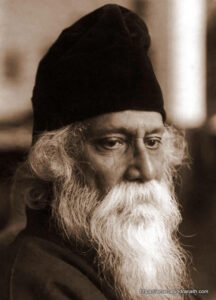
The song that I came to sing remains unsung.
THE SONG THAT I came to sing remains unsung to this day.
I have spent my days in stringing and in unstringing my instrument.
The time has not come true, the words have not been rightly set;
only there is the agony of wishing in my heart. The blossom has not opened; only the wind is sighing by.
I have not seen his face, nor have I listened to his voice;
only I have heard his gentle footsteps from the road before my house’.
The livelong day has passed in spreading his seat on the floor;
but the lamp has not been lit and I cannot ask him into my house.
I live in the hope of meeting with him; but this meeting is not yet.
“The song that I came to sing remains unsung” is a poignant poem by Rabindranath Tagore, one of the most celebrated poets in Indian literature. This poem reflects on the poet’s struggle to express himself fully and the frustration that arises when his words fail to capture the essence of his message.
The poem begins with the poet acknowledging that he has come to sing a song, but that the song remains unsung. This sets the tone for the rest of the poem, which is marked by a sense of yearning and unfulfilled potential. The poet describes how his words “linger on their way” and how his thoughts “remain unexpressed.”
Despite this struggle, the poet remains determined to find a way to communicate his message. He speaks of how his “heart musters courage” and how he will continue to seek out new words and new ways to express himself. He acknowledges that this journey will not be easy, but he remains committed to it nonetheless.
The poem ends with a sense of both hope and resignation. The poet acknowledges that his song may never be fully sung, but he also recognizes that the act of trying to express himself is valuable in its own right. He writes, “I have spent my days stringing and unstringing my instrument / while the song I came to sing remains unsung.” This final image of the poet tuning his instrument is a powerful one, suggesting that the act of creating and refining one’s art is a worthwhile pursuit, even if the final product is never quite perfect.
“The song that I came to sing remains unsung” is a powerful exploration of the creative process and the struggle to communicate one’s innermost thoughts and feelings. It speaks to the universal human experience of striving for something that may always remain just out of reach, and it offers a message of hope and perseverance in the face of this challenge.