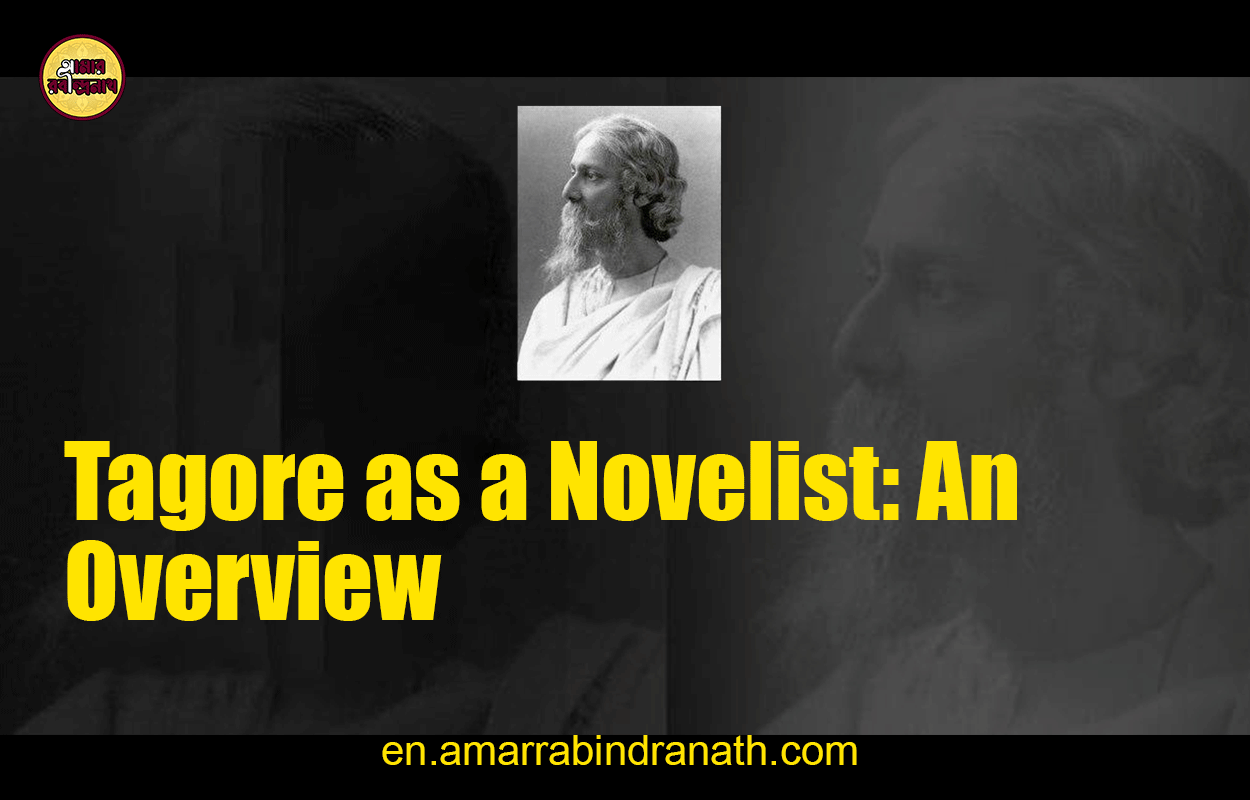
Rabindranath Tagore is primarily known to the world for his poetry, particularly the collection “Gitanjali,” which earned him the Nobel Prize in Literature in 1913. However, Tagore was a versatile genius who not only composed poems but also penned short stories, plays, essays, and novels. Through all these mediums, he probed the intricacies of the human heart and societal norms, while also reflecting on India’s cultural, philosophical, and spiritual traditions. This article will provide an overview of Tagore’s work as a novelist and its significance in the canon of world literature.
Table of Contents
Tagore as a Novelist: An Overview

Background and Context
Born in 1861 in Calcutta (now Kolkata), Tagore hailed from a prominent and culturally enriched Bengali family. Growing up, he had access to diverse literary traditions, both Eastern and Western. This cross-cultural exposure influenced his multifaceted literary productions, including his novels.

Major Novels
- The Home and the World (Ghare-Baire, 1916):
- This is perhaps Tagore’s most renowned novel in the global arena, largely due to its translation into many languages and its film adaptation by the famed Indian filmmaker, Satyajit Ray. The narrative revolves around a love triangle set against the backdrop of the early 20th-century nationalist movement in India. While dealing with personal dilemmas and relationships, the novel raises profound questions about nationalism, identity, and the true essence of freedom.
- The Wreck (Naukadubi, 1906):
- A dramatic tale of mistaken identities and intricate relationships, “The Wreck” explores themes of fate, love, and societal expectations. Like many of Tagore’s works, this novel deals with the delicate balance between individual desires and societal constraints.
- Four Chapters (Char Adhyay, 1934):
- Set against the backdrop of the Indian freedom movement, this novel delves into the minds of young revolutionaries. Tagore critiques blind nationalism and emphasizes the values of rationality and humanity over violent revolution.
- Farewell Song (Shesher Kobita, 1929):
- This novel, often considered one of Tagore’s masterpieces, is a lyrical exploration of love. Using poetic prose, Tagore delves into the world of romance, love, and the eventual realities of life that lovers must confront.

Themes in Tagore’s Novels
- Interplay of Tradition and Modernity: Tagore’s novels often depict the tension between tradition and modernity, especially as India underwent significant socio-political changes. Characters often grapple with their traditional roots while being lured by modern ideologies or lifestyles.
- Women and Society: Tagore portrayed women as strong, introspective, and complex individuals, challenging the traditional and often restrictive roles imposed on them. His novels, like “The Home and the World,” present women who are not just mere characters but powerful symbols of change and progress.
- Nature and Philosophy: Much like his poems, Tagore’s novels are imbued with profound philosophical reflections. His deep connection with nature is evident in the vivid descriptions and metaphors he uses, making the environment almost a character in its own right.
- Critique of Nationalism: Tagore was a patriot, but he was wary of fervent nationalism, which he saw as potentially divisive and blinding. His novels critique blind devotion to a nation and highlight the essence of universal humanity.
Significance and Impact
Tagore’s novels offer a unique blend of storytelling that is both rooted in Indian traditions and universally relevant. By intertwining personal dilemmas with larger societal issues, he made his works resonate with readers across the world. Moreover, the lyrical and philosophical quality of his prose elevates these novels from mere narratives to profound reflections on life, love, and society.
Tagore’s influence goes beyond the realm of literature. His views on education, nationalism, and spirituality have shaped thinkers globally. As a novelist, he brought forth the complexities of the Indian society of his times, capturing its transformation and its age-old values.
In conclusion, while Rabindranath Tagore might be best known for his poetic achievements, his contributions as a novelist are equally significant. Through his novels, he not only told stories but also raised pertinent questions, critiqued societal norms, and offered philosophical insights that continue to be relevant. His works are a testament to the fact that literature, when crafted with passion and insight, can transcend boundaries and become timeless.